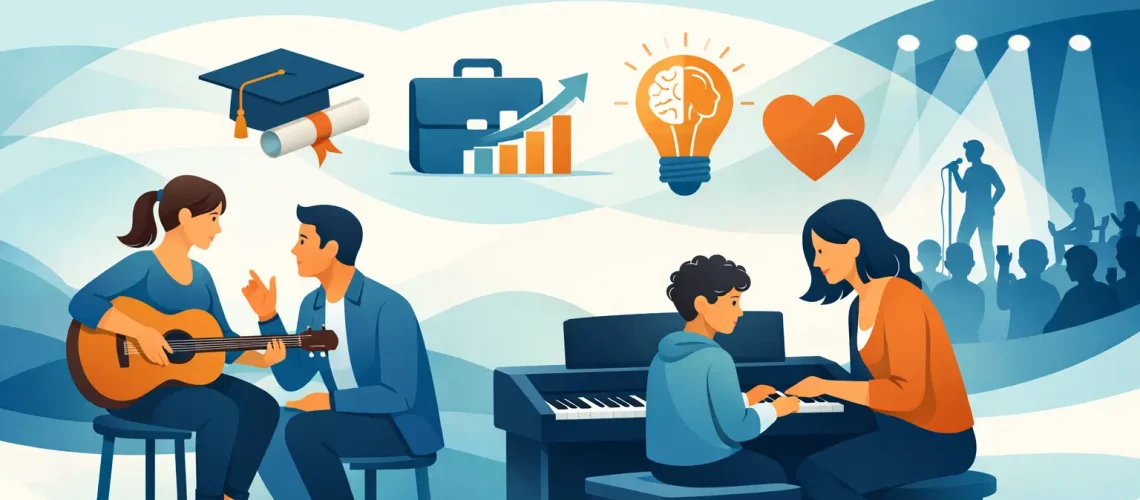
A child who can count into a song, recover after a missed chord, and keep playing in front of a crowd is learning more than music. The real music lesson benefits show up in the practice room, at school, around the dinner table, and eventually under the stage lights. For adults, that same growth can mean reclaiming a creative part of yourself, building a new routine, or finally playing the song that has lived in your head for years.
Great lessons are not about chasing perfection or piling on drills. They are about building real skills, applying them to music you love, and gaining the confidence to keep going when something feels hard. That is where the lasting payoff lives.
Music Lesson Benefits Start With Real Progress
The fastest way to lose interest in an instrument is to feel like you are working without making music. Students need fundamentals, but they also need a reason to use them. Learning a favorite riff, a drum groove, or the opening of a song they recognize gives technique a purpose.
A strong teacher connects the two. Note reading helps a piano student understand the map of the keyboard. Rhythm work helps a drummer hold a band together. Chord shapes help a guitarist play dozens of songs instead of memorizing one pattern at a time. Voice technique helps a singer perform with more control and less strain.
That balance matters for every age. A seven-year-old may need short wins and clear routines. A teen may be motivated by a band, a favorite artist, or the chance to perform. An adult may want to play for personal enjoyment after a long day. The lesson plan should meet the student where they are, then give them a clear next step.
Confidence Is Built One Small Win at a Time
Confidence does not arrive because someone says, “You are talented.” It grows when a student experiences evidence: I could not play that last month, and now I can.
Music offers plenty of those moments. It might be keeping a steady beat through an entire song, switching cleanly between chords, singing in front of a teacher for the first time, or walking onstage despite nervousness. Each success changes how a student sees their own ability to learn.
For kids and teens, this kind of confidence often carries into other parts of life. They learn that mistakes are not a reason to stop. They are information. Miss a note, find the beat again, and stay in the song. That is a powerful habit for school presentations, sports, auditions, and everyday challenges.
Adults benefit from it too. Starting as a beginner can feel vulnerable, especially if you have spent years being competent at work or caring for everyone else. Music lessons make room to be new at something. With patient instruction and consistent effort, that discomfort turns into pride.
Focus, Patience, and Follow-Through Get Stronger
Practice is not always glamorous. Sometimes it means slowing down a tricky measure, repeating a scale, or working on the same transition until your hands and ears agree. But that focused repetition is exactly what makes music instruction valuable.
Students learn to break a big goal into manageable pieces. Instead of saying, “I want to play guitar,” they can say, “This week I will learn the chord changes in the verse.” Instead of hoping a difficult rhythm clicks by magic, they learn to count it, clap it, slow it down, and build it back up.
That process develops patience and follow-through. The benefit is not that every student becomes obsessed with practicing for hours. Real life is busy, and practice time will vary. The goal is to help students create a sustainable habit, even if it is 10 focused minutes on a school night or a longer session on the weekend.
Consistency beats intensity that disappears after two weeks. A good instructor helps students set realistic goals, notice progress, and adjust when a routine is not working.
Music Gives Students a Healthy Way to Express Themselves
Some students explain exactly how they feel. Others would rather play it, sing it, or hit a crash cymbal at the right moment. Music gives people a creative outlet that does not require having the perfect words.
That does not mean every lesson needs to become therapy. It means music can be a reliable space for expression, release, and joy. A student may connect with blues because it lets them bend a note and make it ache. Another may love a loud rock chorus because it feels powerful. A pianist may find calm in a piece that asks for careful attention and control.
The song choices matter. When students are invited to learn music they genuinely enjoy, they are more likely to stay engaged. They also begin to develop taste, listening skills, and an artistic voice of their own.
Playing With Others Changes the Experience
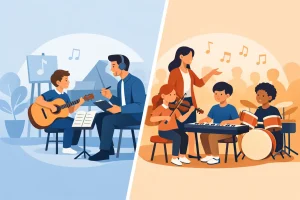
Private lessons build the individual skills that musicians need. Group playing teaches students what happens when their part becomes part of something bigger.
In a band setting, students have to listen as much as they play. A guitarist cannot rush ahead because the drummer has to hold the groove. A singer learns how to enter at the right time. A bassist discovers that a simple, solid line can make the whole song feel great. These are musical lessons, but they are also lessons in communication, responsibility, and teamwork.
Live performance raises the stakes in a healthy way. It gives practice a deadline and a purpose. Students learn how to prepare, manage nerves, recover from surprises, and support one another. The applause is fun, but the bigger win is realizing, “I did something that scared me, and I made it through.”
Performance is not mandatory for every musician. Some students want a private creative outlet, and that is completely valid. But for students who are ready, a supportive stage experience can become a defining milestone.
The Benefits Depend on the Lesson Experience
Not every music program delivers the same results. A student can lose momentum if lessons feel disconnected from their goals, too rigid for their learning style, or too unstructured to create measurable improvement.
Look for instruction that combines proper technique with songs students actually want to play. Teachers should be able to explain the why behind an exercise, adapt for different ages and abilities, and set clear goals without draining the fun out of music. It also helps when instructors know what performing feels like because they have played real stages themselves.
At Rawk U, students learn core musicianship alongside recognizable songs, then have opportunities to bring those skills to life in performance-focused programs. That path matters because a student should not have to choose between learning the basics and feeling like a musician right now.
What Parents and Adult Students Can Do Next
The best first step is simple: give the student a chance to try. A trial lesson can reveal whether guitar, piano, drums, bass, or voice feels like the right fit. It also lets families see how a teacher connects with the student and how the school approaches progress.
Do not wait for perfect timing, a perfect instrument, or proof of natural talent. Beginners are welcome, returning musicians are welcome, and students who feel nervous are especially welcome. The right lesson environment makes room for all of that.
Book Your FREE Trial Lesson, learn the Art of RAWK, and give yourself or your child a place to make some noise, build real skills, and discover what can happen one song at a time.