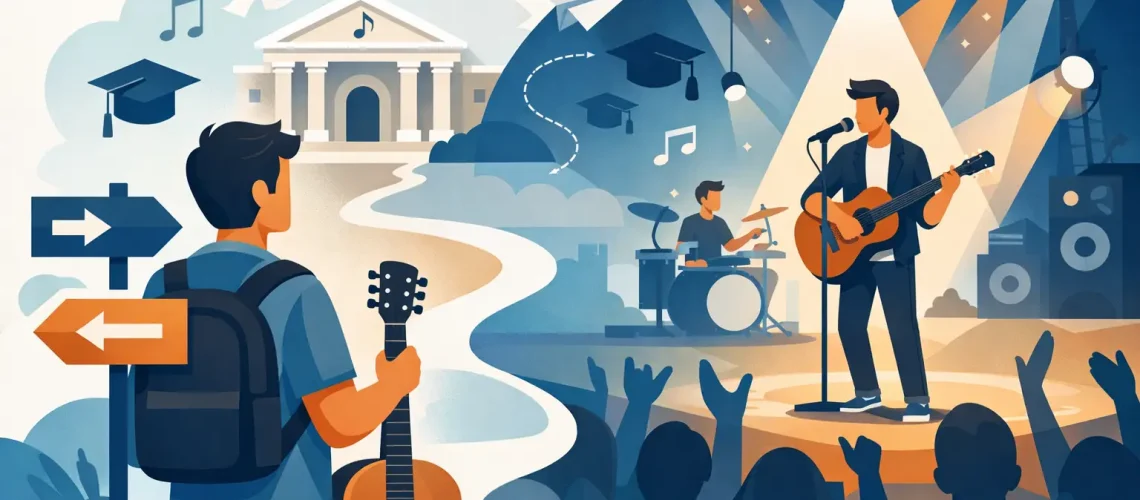
A great music school should do more than fill a weekly time slot. It should give a child the thrill of playing their first real song, give an adult the confidence to start again, and create a path from bedroom practice to a real stage. If lessons feel disconnected from the music a student loves, motivation fades fast. The right school makes progress feel exciting, personal, and achievable.
For Philadelphia families, teens, and adults, choosing where to learn is a big decision. You are not just picking an instrument or a lesson time. You are choosing teachers, a learning environment, and a community that can shape a student’s confidence for years.
What a Great Music School Should Teach
Songs matter. A student who can recognize the riff, chorus, or groove they are working toward has a reason to come back next week. But a school that teaches only songs can leave students stuck when they want to learn something new on their own.
The strongest instruction combines immediate fun with the skills that make music make sense. That means learning rhythm, note reading, music theory, chords, technique, listening skills, and instrument-specific fundamentals while applying those skills to music students actually want to play. A beginner guitarist may start with a favorite rock progression. A piano student may learn a familiar melody while building hand position and rhythm. A voice student may work on a song they love while learning healthy breath support and pitch control.
That balance matters at every age. Kids need quick wins, especially in the first few weeks. Adults want to play the songs that brought them back to music in the first place. In both cases, fundamentals are what turn a good first song into lasting ability.
Ask a prospective school how it approaches repertoire and technique. If the answer is all drills with no musical payoff, students may lose interest. If the answer is only “play what you want” with no plan for core skills, progress can hit a wall. The sweet spot is structured learning that still feels like making music.
Look for Teachers Who Know the Stage
A music degree, teaching experience, and a warm personality all matter. So does real-world musical experience. Teachers who actively perform understand the skills that are hard to learn from a book: how to hold steady through nerves, listen to a drummer, recover from a missed note, shape a song, and connect with an audience.
That does not mean every instructor needs to be a touring celebrity. It means they should be capable musicians who bring practical insight into the lesson room and care enough to meet each student where they are. A seven-year-old taking their first piano lesson needs a different approach than a returning bassist who played in bands years ago. The best teachers adjust without lowering the standard.
Before enrolling, ask about the instructor’s background and how students are matched with teachers. It is also worth asking what happens if the fit is not right. Personality is part of the equation. Students often work harder when they feel seen, encouraged, and challenged by someone they trust.
Why Performance Changes the Music School Experience
Private lessons build individual skills. Performance gives those skills a purpose.
For many students, the first time playing with other musicians is the moment everything clicks. They learn that a song is not just a series of notes. It is timing, listening, communication, patience, and teamwork. They begin to hear where their part fits. They learn to keep going when something goes wrong. Those are music skills, but they are also life skills.
A performance-focused music school creates opportunities that are appropriate for the student’s level. A complete beginner may not be ready for a full band set in month one, and that is okay. But they should be able to see a clear path forward: learn foundational skills, build a song list, rehearse with support, and eventually perform for a real audience.
Look for schools that offer structured showcases, concerts, workshops, and band programs instead of treating performance as an occasional bonus. Regular events give students a goal, while rehearsals teach them how to prepare. At Rawk U, private instruction can lead into live performance experiences, including concerts and the six-week Grace the Stage rock band program. That kind of progression helps students build confidence one song at a time.
Choose the Right Pace for Your Student
There is no single “correct” timeline for learning music. A highly motivated teen practicing every day may move quickly. A busy adult with work and family commitments may need a slower, steadier pace. A younger child may need short, focused goals and lots of encouragement.
What matters is consistent progress. In a healthy lesson program, students can often begin playing recognizable music within four to six weeks while continuing to develop the skills underneath it. They should know what they are working on, why it matters, and what comes next.
Be realistic about practice, too. Daily practice does not need to mean an hour in front of a music stand. For a beginner, ten focused minutes several days a week can be more valuable than one frustrated marathon session. A good teacher can help families set a routine that works at home and help adult students build practice into a crowded schedule.
The school should also be honest about trade-offs. Students who want to prepare for auditions, advanced ensembles, or major performances may need more intensive practice and coaching. Students learning for relaxation can take a more flexible route. Both goals are valid, but the instruction should match the goal.
Questions to Ask Before You Enroll
A free trial lesson is one of the best ways to find out whether a school feels right. Watch how the teacher communicates. Does the student leave energized? Is there a clear plan? Does the lesson feel welcoming without feeling unstructured?
You should also get straightforward answers about scheduling, tuition, missed lessons, and enrollment terms. Month-to-month lessons can be a strong option for families who want flexibility, especially when a child is trying an instrument for the first time. At the same time, consistent attendance is where real progress happens, so flexibility should support commitment, not replace it.
Ask whether the school serves students at your level and age. A program built only for young children may not feel comfortable for an adult beginner. A school focused only on advanced players may overwhelm a student who is just learning to count beats. The best communities make room for both the first chord and the next big solo.
Finally, pay attention to the culture. Is the school competitive in a way that inspires students, or in a way that makes beginners feel behind? Does it celebrate effort and progress? Are students encouraged to support one another? Music is personal, and the environment can determine whether a student sticks with it when learning gets challenging.
The Best Music School Makes Practice Matter
The right program will not promise instant greatness. Learning an instrument takes patience, repetition, and the willingness to work through awkward early stages. But it should make that work feel worthwhile. A student should hear their improvement, understand their next goal, and have chances to share what they can do.
Whether you are signing up your child for guitar, helping a teen find their voice, or finally returning to the drums, start with a lesson that feels like an invitation to grow. Book your FREE Trial Lesson, bring the songs that inspire you, and take the first step toward playing them with confidence onstage.