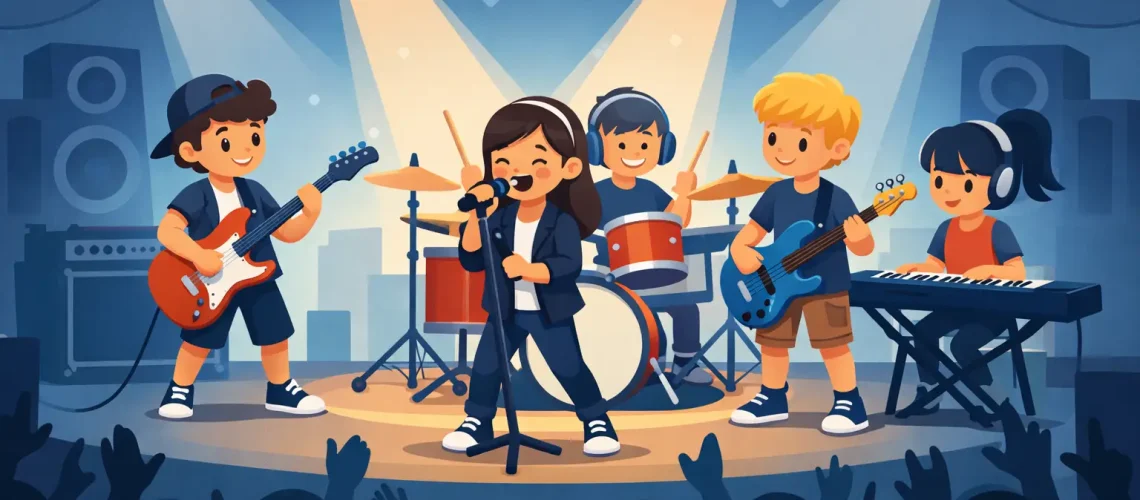
A child hits the first big drum fill, lands the chorus with the group, and looks up to see a room full of people cheering. That moment is bigger than a song. Rock band classes for kids give young musicians a place to turn individual lessons into something real: a shared sound, a live audience, and the confidence that comes from earning both.
For parents, the appeal is not simply that kids are busy after school. A strong band program teaches students how to listen, prepare, collaborate, recover from mistakes, and show up for their teammates. For kids, it feels even better: they get to play music they recognize with other musicians who are working toward the same goal.
Why Rock Band Classes for Kids Work
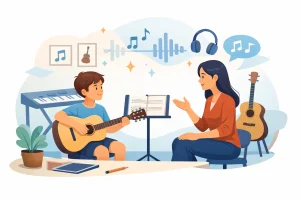
Private lessons are where a young musician learns the building blocks. They develop technique, rhythm, note reading, chords, vocal control, and the habits that make progress possible. Band class is where those skills stop feeling like exercises and start doing a job.
In a band, a guitarist has to hold a steady rhythm while the singer delivers a verse. A drummer learns that a great beat is not about playing the most notes – it is about making the whole group sound good. Bass players discover how powerfully they connect drums and harmony. Keyboard players learn when to fill space and when to leave it open. Every role matters.
That is why the best rock band programs are not just casual jam sessions. They are structured, coached rehearsals built around songs that fit the students’ current ability while still giving them something exciting to reach for. Kids should feel challenged, not stranded.
The confidence comes from preparation
Performance confidence is not a personality trait reserved for the loudest kid in the room. It is built through repetition, encouragement, and small wins. Learning a song section by section, rehearsing it with a group, and playing it successfully in front of others shows students that nerves do not have to stop them.
Some children arrive ready to grab a microphone. Others would rather stand behind an amp and let their playing speak first. Both belong in a band. A caring instructor helps each student find a role, contribute at their own pace, and take the next step when they are ready.
What Kids Learn Beyond Their Instrument
A rock band asks students to think beyond their own part. They learn to count introductions, follow transitions, watch for cues, and keep going if someone misses a note. These are practical musical skills, but they also build resilience.
Band rehearsal creates healthy accountability. If a student practices their song at home, the whole group benefits. If they are struggling with a section, they learn to ask for help and work through it. That kind of responsibility feels different when fellow bandmates are counting on them.
The social side matters, too. For many kids, making music together is an easier way to connect than being asked to walk into a room and make conversation. A shared favorite song can break the ice fast. Over time, students learn how to offer encouragement, accept feedback, and celebrate someone else’s great solo without feeling competitive.
There is a trade-off worth understanding: group programs cannot replace focused one-on-one instruction, especially for complete beginners still learning how to hold sticks, form chords, or sing with healthy technique. The strongest path usually combines both. Private lessons build the individual player. Band class develops the musician who can play with others.
When Is a Child Ready for Band Class?
There is no single age or skill level that fits every child. A confident seven-year-old with a few months of steady lessons may be ready for a beginner group, while an older student may need more time to get comfortable on an instrument. Readiness is less about perfection and more about having a workable foundation.
A child is often ready when they can keep a basic beat or rhythm, learn short song sections with support, stay engaged during rehearsal, and handle direction from an instructor. They do not need to be a virtuoso. In fact, waiting until a student feels “good enough” can mean waiting too long. Band class is one of the places where they become good enough.
The right program should place students thoughtfully. Age, musical experience, instrument, personality, and song difficulty all affect whether a group clicks. A beginning guitarist should not be thrown into material that demands advanced lead playing. At the same time, an advancing player should have room to stretch instead of repeating parts they outgrew months ago.
What a Great Kids’ Band Program Looks Like
Look for a program with a clear musical destination. A performance gives rehearsals purpose. Students know why they are polishing the ending, fixing the timing in the bridge, and practicing that one tricky chord change again. The goal is not pressure. It is pride.
Great instruction also balances favorite songs with real fundamentals. Kids are more likely to practice when they love the music, but recognizable songs can teach serious musicianship. A rock song can introduce eighth-note rhythm, chord progressions, dynamics, harmony, song structure, stage presence, and the art of listening across the band.
Working musicians make a difference here. Instructors who have played real stages understand the practical details that books cannot always teach: how to count in a song, recover from a missed entrance, manage volume, communicate during a set, and make an audience feel the energy. They also know that a performance does not need to be flawless to be powerful.
At Rawk U, students build those skills through performance-focused instruction, including the six-week Grace the Stage rock band program. The approach pairs the thrill of playing rock music with the disciplined fundamentals that help young musicians keep growing long after the applause ends.
Parents should know what to ask
Before enrolling, ask how students are grouped, how often they rehearse, and whether the program includes a real performance opportunity. Ask whether instructors adapt parts for different levels and how they communicate progress to families. A program should be fun, but families deserve to know what their child is learning and where the experience is headed.
It also helps to ask about practice expectations. A band class can motivate practice, but it cannot do all the work in one weekly session. Younger students may need a parent to help create a short, consistent practice routine. Ten focused minutes several days a week can be far more effective than an hour of frustration the night before rehearsal.
How to Help Your Young Musician Thrive
The best support starts with curiosity. Instead of asking, “Did you practice?” try asking which song section felt easier this week or what the drummer did during the chorus. Specific questions show kids that their musical world matters.
Keep the instrument accessible at home. A guitar packed away in a case, a keyboard buried under laundry, or a drum pad without sticks sends the wrong message on a busy weekday. Make it easy for your child to play a few minutes when inspiration hits.
Finally, let the performance be theirs. Encourage them, take the photo, cheer loudly, and resist correcting every detail on the ride home. They will already know what went wrong. What they need to remember is that they got onstage, played with a team, and did something brave.
A first band performance may begin with shaky hands and a counted-off beat. It can end with a young musician walking offstage taller than when they walked on. Book a FREE Trial Lesson and give your child a place to learn the art of RAWK – one song, one rehearsal, and one unforgettable stage moment at a time.