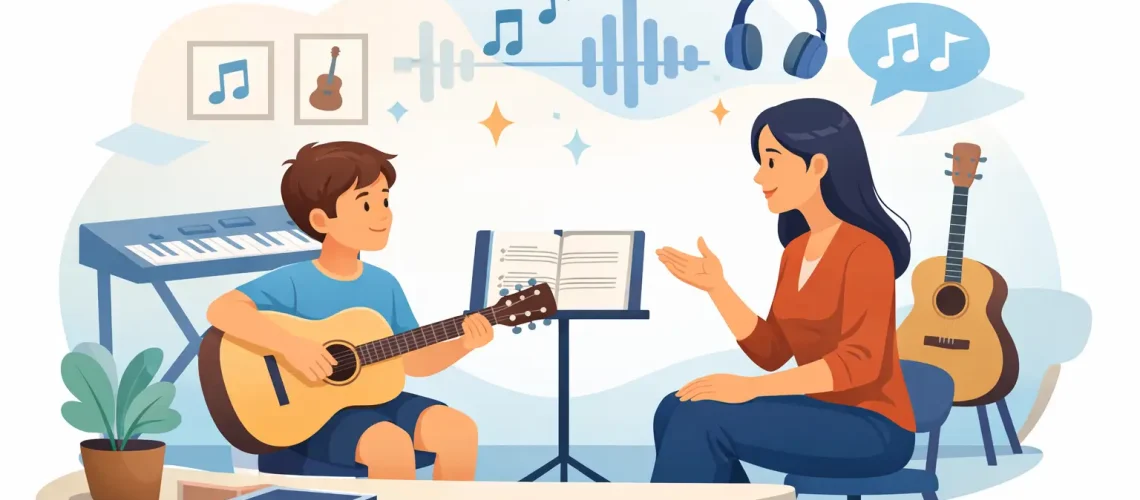
A first music lesson should not feel like an audition. It should feel like the moment a student realizes, “I can do this.” A free trial music lesson gives children, teens, and adults a low-pressure way to sit down with an experienced teacher, make some sound, play something recognizable, and see what learning music can really feel like.
For some students, that first win is holding a guitar pick correctly and playing part of a riff. For others, it is finding a steady beat on drums, singing with more confidence, or finally understanding the piano chords behind a favorite song. The goal is not perfection on day one. The goal is momentum.
A Free Trial Music Lesson Is About the Right Fit
Choosing a music school is personal. Parents want to know their child will be supported, challenged, and treated as an individual. Adult beginners want a teacher who will not make them feel behind before they have played their first note. Returning musicians want help getting unstuck without going back to square one.
That is what a trial lesson is built to answer. You get a real feel for the instructor’s teaching style, the school environment, and the instrument itself. More importantly, the teacher gets to learn about the student: what music they love, what experience they have, what makes them nervous, and what they want to accomplish.
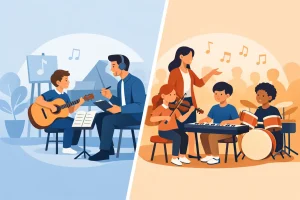
A great teacher does not use the same approach for every student. A seven-year-old who loves big choruses needs a different entry point than a high school drummer preparing for a band, or an adult guitarist who has not played since college. The lesson should meet the student where they are and give them a clear next step.
What to Expect During Your First Lesson
A trial is not a sales pitch with an instrument in the corner. It should be an actual lesson, with time to talk, play, and learn. At Rawk U, students work with active musicians who know what it takes to develop skills for the practice room and the stage.
The instructor will usually begin with a quick conversation. For a younger student, that may mean asking about favorite artists, school activities, and whether they have ever tried an instrument. For an adult, it may mean talking about musical goals, past experience, and the songs that made them want to start playing again.
From there, the hands-on part begins. A beginner might learn how to sit at the piano, hold drumsticks, tune into the pulse of a song, or produce a clear sound on guitar. A student with previous experience may play a short section of something they know, then work on a specific challenge such as timing, chord changes, vocal control, reading, or technique.
The best first lessons balance excitement with substance. Yes, students should get to play music they recognize. But they should also begin building the basics that make future songs easier: rhythm, listening, coordination, note reading, hand position, breathing, chord shapes, and musical vocabulary. Rock starts with a great sound, but it lasts because the player has the tools to keep growing.
You Do Not Need to Arrive Prepared
Many people wait because they think they need to buy the perfect instrument, learn a few notes online, or prove they are serious before scheduling. That is backwards. The trial is where you ask questions and get honest guidance.
If you do not own an instrument yet, the instructor can help you understand what to look for before making a purchase. If your child is unsure between piano and drums, a conversation with a teacher can bring clarity. If you are worried about reading music, coordination, or being “too old” to begin, bring that concern with you. Good instruction is designed to make the unfamiliar feel manageable.
What Parents Should Look For
A music lesson can be fun without being random. Parents should leave a free trial knowing how their child will make progress, not just that they had a good time.
Look for a teacher who communicates clearly with both student and parent. They should be able to explain what your child worked on, what comes next, and how practice at home can stay realistic. Ten focused minutes several days a week can be far more useful than one frustrated hour before the next lesson.
Also pay attention to connection. Kids learn best when they feel safe enough to try, make mistakes, and try again. The right teacher knows when to slow down, when to cheer louder, and when to raise the bar. They make room for favorite songs while teaching the habits that build confidence over time.
Performance opportunities matter, too. Private lessons create the foundation, but performing gives that work a purpose. Students who play for others learn how to prepare, recover from a missed note, listen to a group, and own the room. Those skills travel well beyond music.
Adults: Start Where You Are, Not Where You Think You Should Be
Adults often arrive carrying a strange amount of guilt about music. Maybe you quit lessons as a kid. Maybe you have owned a guitar for years but never moved beyond a few chords. Maybe you have always wanted to sing but worry that everyone else started earlier.
None of that disqualifies you. A trial lesson is a chance to stop judging your starting point and start making music from it. You may want to learn classic rock, blues, pop, singer-songwriter material, or the songs your kids are playing. Your teacher can shape a path around those goals while helping you develop the technique to play without strain and the theory to understand what you are doing.
Progress does take consistency. There is no magic trick that replaces practice. But practice becomes easier to sustain when you are working on music you genuinely want to hear. Many students can begin playing pieces of recognizable songs within four to six weeks, depending on the instrument, their starting point, and how regularly they practice.
Questions Worth Asking at a Trial Lesson
You do not need a long checklist, but a few direct questions can help you make a confident decision. Ask how lessons are tailored to the student’s age and goals. Ask what a beginner’s first month looks like. Ask how the school approaches songs, technique, theory, and reading.
If live performance is important to your family, ask when students have opportunities to play. If scheduling is a concern, ask what enrollment looks like and how the school handles changes. And if your child has a specific challenge, such as attention, shyness, perfectionism, or trouble practicing, say so. The teacher cannot personalize a plan around information they do not have.
The answers should feel straightforward. Music education has room for big dreams, but it should also offer a practical plan for getting there.
After the Trial: Keep the Energy Moving
The first lesson is only the spark. Real growth comes from returning each week, practicing in small pieces, learning songs, and celebrating the moments that used to feel impossible. A student who can barely form a chord today may be playing in front of a crowd months from now. A shy singer may find a voice that carries beyond the microphone.
That transformation does not happen because every lesson is easy. It happens because students are challenged by people who believe they can rise to it. The right music school brings structure, encouragement, and a community that makes showing up feel worth it.
Book your FREE Trial Lesson, bring the songs that light you up, and take the first step toward playing them for real. Learn the Art of RAWK!