When school lets out, many kids want a break from schedules and worksheets. Parents still want their summer to count. A great summer music camp does both: it gives young musicians a place to have a blast, make friends, learn songs they actually recognize, and build the kind of confidence that lasts long after the final day.
The difference is what happens beyond the practice room. Learning a few chords or a drumbeat is exciting. Learning to listen to a band, hold down a part, recover from a mistake, and perform for an audience? That is where a student starts to feel like a real musician.
What a Summer Music Camp Should Deliver
Not every camp needs to turn a beginner into a stage veteran in one week. But the best programs have a clear musical goal. Students should leave with more than a craft project, a T-shirt, and a handful of vague memories. They should be able to point to something they can now play, sing, hear, or understand.
For many kids, that first win is learning a recognizable song. It may be a guitar riff, a piano hook, a vocal chorus, or the beat that keeps the whole group moving. Familiar music creates quick excitement, but it also gives instructors a practical way to teach the essentials: rhythm, timing, note reading, chord shapes, technique, dynamics, and listening.
That balance matters. A camp that focuses only on fun can feel exciting in the moment but leave students without a path forward. A program that feels like summer school can drain the joy right out of music. The sweet spot is structured instruction with a loud, welcoming, song-first payoff.
Why Playing With Others Changes Everything
Private lessons are powerful because instruction can be tailored to one student. Group music-making adds a different kind of growth. In a band setting, students discover that their part matters even when it is not the flashiest part in the song.
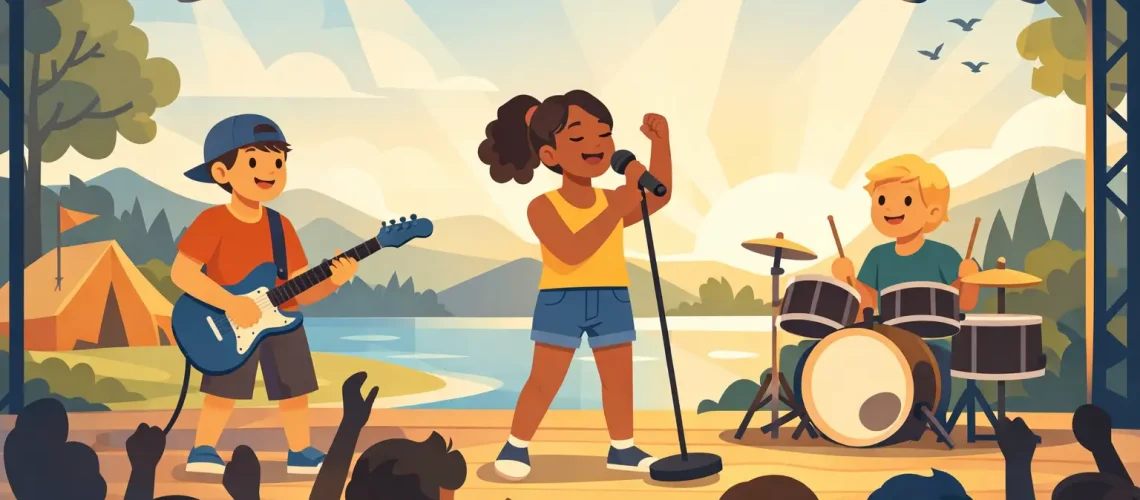
A drummer learns that steady time helps everyone else sound better. A guitarist learns when not to play. A singer learns to enter with confidence and blend with other voices. A bass player learns how to lock in with the drums. These are musical skills, but they are also lessons in focus, teamwork, patience, and responsibility.
For shy students, the group can make performing feel less intimidating. They are not standing alone under a spotlight. They are part of a team with a shared mission: get the song across, support one another, and have fun doing it. For more outgoing students, the group teaches an equally valuable lesson: great performers know how to listen.
Performance Gives Practice a Purpose
Kids practice differently when they know they are preparing for a performance. Suddenly, the tricky transition between chords matters. Counting the rest matters. Starting and ending together matters. Even students who resist practicing at home often find new motivation when they have bandmates depending on them.
That does not mean every student needs to be pushed into a high-pressure show before they are ready. The right performance opportunity is supportive, well prepared, and appropriate for the group’s age and experience. It should celebrate progress, not demand perfection.
A live performance also helps families see the growth that can be hard to notice week to week. A child who once barely spoke above a whisper may step up to the microphone. A beginner guitarist may play through a whole song without stopping. Those moments are bigger than applause. They show students that they can work at something difficult and share the result with other people.
Choosing the Right Summer Music Camp
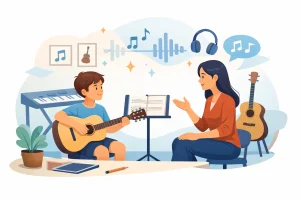
The best choice depends on your child’s age, interests, and current experience. A complete beginner may thrive in a camp that introduces several instruments and emphasizes rhythm, basic song structure, and confidence. A student already taking lessons may be ready for a more focused rock band experience where they develop an instrument-specific role.
Before enrolling, ask what students will actually do each day. Will they spend meaningful time playing music, or is music only one small part of a general day camp? Find out whether students are grouped by age and skill level, whether they work toward songs or a performance, and how instructors support beginners who are still finding their footing.
Teacher experience deserves attention, too. Working musicians bring a practical perspective that students can feel. They understand what it takes to play with a group, prepare for a set, manage nerves, and communicate onstage. Just as important, they know how to meet a seven-year-old beginner or a returning teen musician exactly where they are.
Look for a culture that is encouraging without being overly casual. Kids should be allowed to make mistakes, ask questions, and try again. At the same time, they should be challenged to listen closely, show up prepared, and take pride in their part. That combination builds real confidence instead of empty praise.
A Strong Camp Experience Starts Before Day One
A little preparation can help a student walk in ready to RAWK. If they already play an instrument, encourage them to bring it if the camp requests it and make sure it is in working order. Fresh strings, drumsticks, a pencil, a water bottle, and comfortable clothes go a long way.
More importantly, talk about what it feels like to be new. Even an excited child may be nervous about meeting other musicians or playing in front of people. Let them know they do not need to arrive as the best player in the room. They only need to arrive willing to listen, participate, and give the music an honest try.
Parents can also set the right expectation around practice. Camp days can be full, and students still need time to relax. But spending even ten focused minutes reviewing a chord progression, lyric, or rhythm pattern can make the next day feel far more rewarding. Small, consistent effort beats a last-minute cram session every time.
The Summer Experience Can Become a Musical Next Step
The final performance should not have to be the finish line. For many students, camp reveals what they want to do next. They may want private guitar, drum, piano, bass, or voice lessons. They may want to join a band program where they can keep building songs with other young musicians. They may simply want to keep playing because, for the first time, music feels like something they own.
That is why a well-run camp can be such a meaningful entry point. It gives beginners a low-pressure way to try music before committing to ongoing lessons. It gives active students a fresh challenge and a reason to stay engaged over the summer. And it gives parents a clearer picture of how their child learns, collaborates, and grows when given a creative goal.
At Rawk U, the goal is never to make students wait months before they feel the thrill of playing. Fundamentals matter, and so does getting students into real songs and real performance experiences. Whether a young musician is picking up an instrument for the first time or ready to take a bigger role in a band, the right guidance can turn summer energy into lasting momentum.
A great camp does not promise instant perfection. It gives students something better: a room full of encouragement, a song worth working on, and the chance to discover that their contribution can make the whole band sound bigger. If your child is ready for that feeling, Book Your FREE Trial Lesson and help them take the first step toward the stage.